Progress that goes beyond numbers
Umoja Rescue Agency (UREA), with support from Plan International Uganda and with funding from the European Union, is strengthening adolescent sexual and reproductive health and rights in Koboko District. The project responds to a context where teenage pregnancy remains a major concern and these are caused by poverty, school dropout, harmful social norms, early and forced marriage, sexual and gender-based violence and limited access to accurate information on Adolescent sexual Reproductive Health and Rights (ASRHR).
The July 2026 results show a promising shift: communities are not simply receiving information. They are beginning to build the local structures, relationships and confidence needed to act on it.
Young people are becoming messengers of change
One of the most encouraging developments is the establishment of a community theatre group in Nyambiri Parish, Kuluba Sub-county. Twenty young people—10 females and 10 males—were mobilised, vetted and oriented to use drama as a platform for social and behaviour change. A second group in Ludara Sub-county is also being constituted.
This is more than a performance initiative. It creates a youth-led space where difficult issues can be discussed in language communities understand and through a medium young people can own. A qualified trainer has developed context-specific scripts addressing harmful social norms, adolescent SRHR, sexual and gender-based violence, unintended teenage pregnancy, gender equality and positive behaviour change.
For donors, this represents an important investment in sustainability: young people are not only beneficiaries of communication—they are becoming communicators themselves.
Women leaders are gaining the confidence to guide others
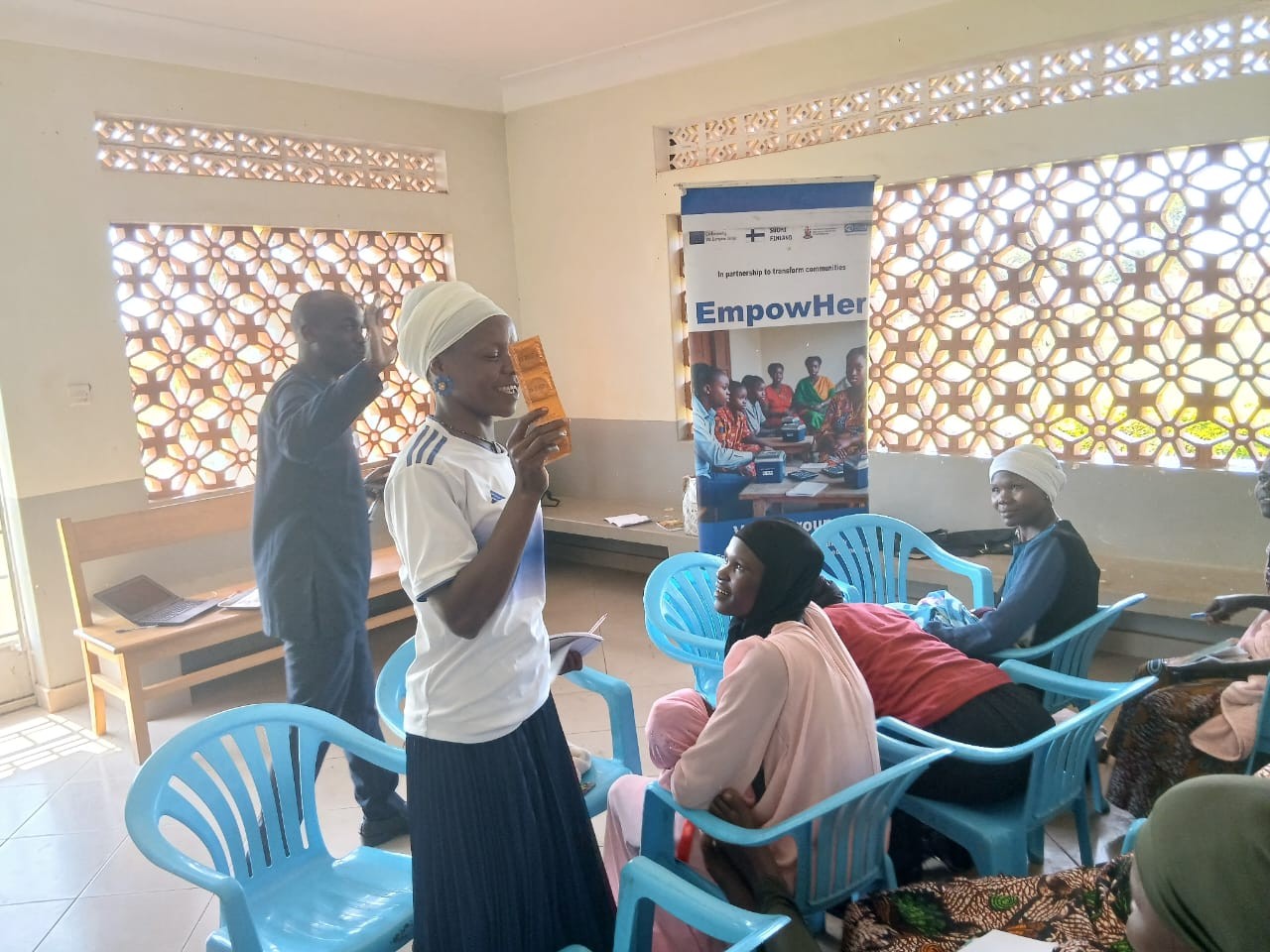
Thirty female leaders from seven Youth Savings and Loan Association groups in Ludara Sub-county completed a two-day capacity-strengthening training on good parenting, family planning, psychosocial support and basic counselling. The participants included three adolescents aged 15–19 and 27 young women aged 20–24, with four participants representing different categories of disability.
The training combined practical demonstrations, group discussion, experience sharing and counselling practice. Participants were able to ask questions, confront misconceptions and gain practical knowledge that can be shared with peers and families.
The significance is clear: when trusted grassroots leaders have accurate information and basic counselling skills, knowledge can travel beyond a training room and into families, savings groups and communities.
A community dialogue is opening space for collective responsibility
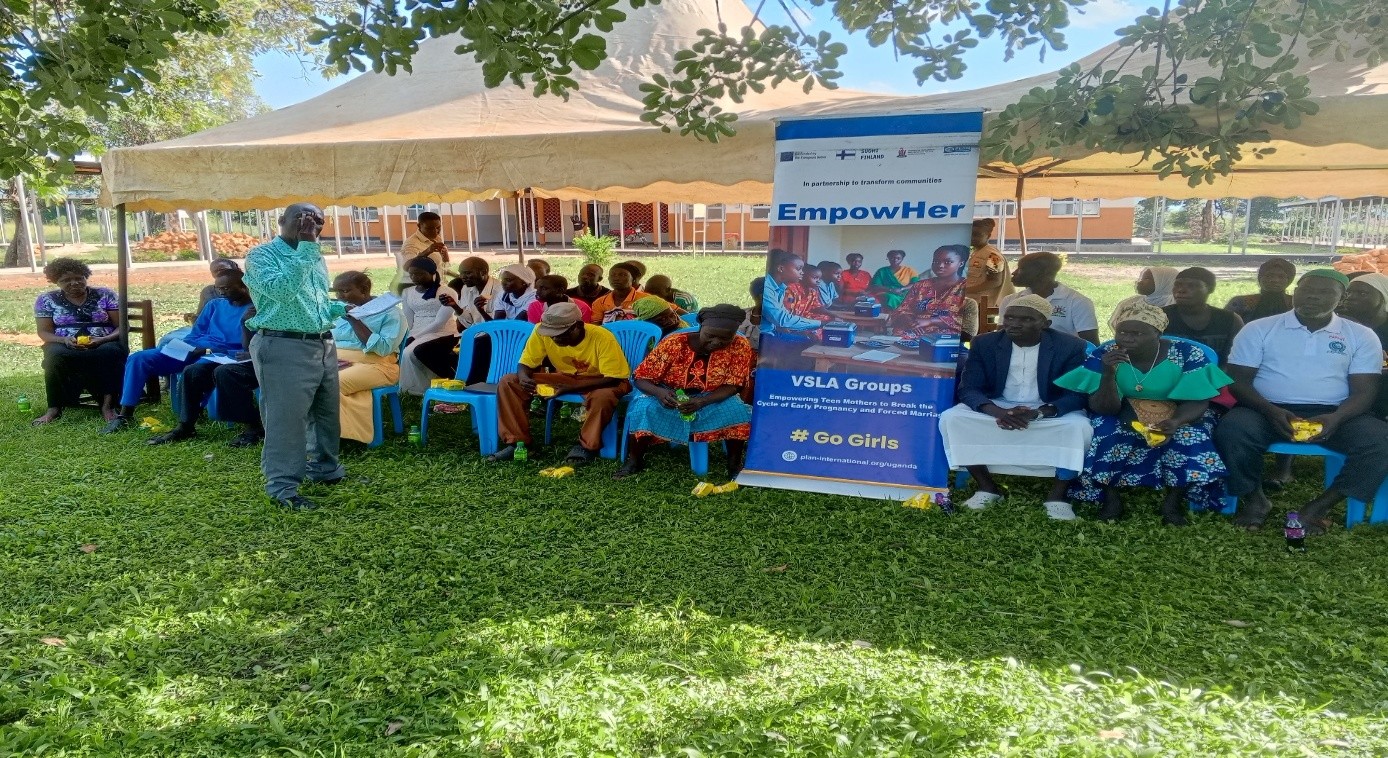
In Chakulia Parish, Ludara Sub-county, 33 people—14 males and 19 females—came together for a community dialogue on teenage pregnancy and SRHR. The group included teenage mothers, youths, parents, local government leaders, religious leaders, cultural leaders, health workers, Police and opinion leaders, alongside a participant with a visual disability.
Rather than treating teenage pregnancy as a problem belonging to adolescents alone, the dialogue helped participants identify the interconnected factors behind it: poor parental guidance, weak parent-child communication, peer pressure, school dropout, early and forced marriage, drug use, child labour and inadequate supervision.
Participants also explored practical solutions, including stronger family communication, support for children to remain in school, improved child protection and stronger referrals to health services. The engagement strengthened collaboration between community leaders, families, health workers, religious leaders and young people.
From awareness to systems that can last
The project is deliberately building local capacity of community structures rather than creating parallel community structures. UREA is working with Community Development Officers, peer educators, health facilities and community leaders and stakeholders from the sub-counties to establish and strengthen mechanisms that can continue beyond individual activities.
The project has also been responsive to implementation realities. The absence of existing registered theatre groups meant that the theatre initiative had to begin from the ground up. Training participants travelled long distances, some mothers attended with infants, and outdated YSLA leadership information created mobilisation challenges. These realities are informing practical adaptations, including decentralised training where possible, mother-friendly arrangements, improved participant databases, mentorship of YSLAs and support for formal group registration.
Why continued investment matters
The foundations are now being laid for wider community reach. The next phase will move from preparation and capacity strengthening toward theatre performances, continued YSLA engagement and further community dialogues. Sustained donor support can help convert these promising foundations into deeper, broader and more lasting change for adolescents and their communities.
A partnership with potential to change trajectories
The EmpowHer experience demonstrates that meaningful change is built through relationships: a youth finding a platform to speak, a mother gaining confidence to challenge misinformation, a parent learning to communicate with a child, a health worker connecting adolescents to services, and community leaders accepting shared responsibility.
These are the building blocks of prevention. They are also the building blocks of a community where girls and young people can remain in school, make informed decisions about their health and futures, and participate safely and confidently in society.
The progress is real. The local capacity is growing. The opportunity now is to sustain the momentum and take these voices further.
Source: EmpowHer Project Monthly Report, reporting period July 2026, prepared by UREA.